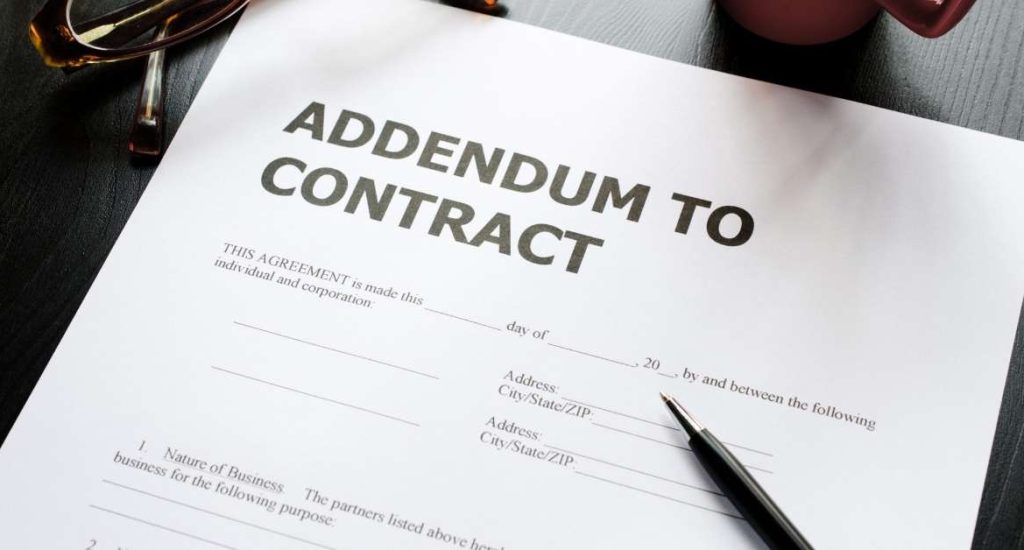


Sublet vs sublease: there’s no difference. Same arrangement, two words for it. A sublease is the contract. Subletting is what you’re doing when you sign one.
That’s the whole answer, and most of the internet gets it wrong.
Here’s what doesn’t change, whichever word your lease happens to use. Your name stays on the original lease. Your subtenant pays you, and you pay the landlord. And when the rent shows up late or the bathroom floor gets ruined, your landlord isn’t calling them. They’re calling you.
The word people actually want when they go hunting for the difference is assignment. That’s the one that hands your lease to somebody else.
Confuse the two and you can find yourself paying for damage done by someone you never met, months after you dropped off the keys.
Three things settle almost every sublease question:
- Sublet and sublease mean the same thing.
- Only an assignment, with a written release, actually gets you off the lease.
- Whether your landlord can refuse comes down to your jurisdiction and your lease clause.
Here’s how each one plays out in D.C., Virginia and Maryland.
Sublet vs Sublease: Why People Think They Are Different
Search the phrase and you’ll find page after page explaining that a “sublet” hands your lease to someone new while a “sublease” keeps you on it.
It’s a tidy distinction. It’s also invented.
Not in the dictionaries, not in the courts, not in any state code we could find. Sublet and sublease are one arrangement wearing two names.
So where did it come from? A real distinction got attached to the wrong pair of words somewhere along the way, and then everybody copied everybody. Virginia’s landlord-tenant code carries the actual version, and it needs one line each. From Va. Code § 55.1-1200:
“Sublease” means the transfer by any tenant of any but not all interests created by a rental agreement.
“Assignment” means the transfer by any tenant of all interests created by a rental agreement.
Part of your lease, or all of it. That’s the line that matters. Which of the two words your paperwork uses has nothing to do with it.
Sublease vs. Assignment vs. Adding a Roommate
Drop the sublet vs sublease question and you’re left with three real options. The risk on each one is completely different, and that’s the part worth your attention.
| Sublease (sublet) | Assignment | Adding a roommate | |
|---|---|---|---|
| Who holds the original lease | You do | The new tenant takes it over | You do, plus the new person is added to it |
| Who pays the landlord | You. Your subtenant pays you. | The new tenant pays the landlord directly | Both of you, jointly |
| Who is liable for unpaid rent and damage | You are, in full | The new tenant, but only if the landlord releases you in writing | Both of you, in full, individually |
| Landlord consent needed | Almost always. Check your lease. | Always | Almost always |
| When it ends | Your sublease can end early. Your lease still runs to its original end date. | On the handoff date, if you were released | At the lease end date, for both of you |
| Best when | You’re leaving for a few months and coming back | You’re leaving for good | You’re staying and sharing the space |
Short version: a sublease keeps your name on the lease and the risk on your shoulders. An assignment is the only one of the three that gets you out, and only if your landlord signs a written release.
No release, no exit. You can move to another state and still be the one on the hook.
What You Stay Responsible For When You Sublease
Your landlord’s contract is with you. Your subtenant’s contract is with you. Two separate agreements, and your landlord was never a party to the second one.
That one fact drives all of this:
- Rent. Subtenant stops paying? You still owe the landlord. In full, on time.
- Damage. Comes out of your security deposit. Not theirs.
- Lease violations. The unauthorized dog, the noise complaints, the party that ran till 3am. All of it goes on your record, not your subtenant’s.
- Eviction. If they won’t leave, that’s usually your problem to solve.
- Collections. Chasing them for what they owe you is a debt you collect yourself.
Which is why screening deserves more effort than most first-time sublessors give it. Verify the income. Actually call the references. And learn how to spot a fake landlord reference before you hand anyone a key, because a confident-sounding “previous landlord” on the phone is sometimes a friend doing a favor.
Can a Landlord Refuse a Sublease in D.C., Virginia or Maryland?
Reviewed September 2026. Laws change, so confirm the current text before relying on any citation below.
Depends where the property sits, and mostly on what your lease says.
That’s the honest answer, and it’s less satisfying than it ought to be. But the three DMV jurisdictions really do handle this differently, and one of them isn’t what the internet says it is.
| Where | Can the landlord say no? | Authority |
|---|---|---|
| Washington, D.C. | Only if the lease contains the ban. If the lease is silent, a sublease is allowed and the landlord may screen the subtenant against its normal rental standards. | D.C. Code § 42-3505.55 |
| Virginia | Yes, for any reason, if the lease says so. State law sets no reasonableness standard, only a response deadline. | Va. Code § 55.1-1204(G) |
| Maryland (statewide) | Yes, if the lease says so. No state statute governs a tenant sublease. | Md. Real Property, Title 8 (silent) |
| Montgomery County, MD | No. Covered leases must permit a sublease with written permission that cannot be unreasonably withheld. | Mont. Cty. Code § 29-27(q) |
Washington, D.C.
D.C. hands landlords a complete veto. But only if they bothered to put it in the lease. Here’s D.C. Code § 42-3505.55:
“A housing provider may, in its sole and absolute discretion, prohibit subletting of the premise or assigning a lease, either in part or in full; provided, that the prohibition is included in the lease. Where the lease provision allows subletting subject to the housing provider’s reasonable consent or where the lease is silent regarding subletting, the housing provider may condition its consent on the prospective subtenant meeting all of the housing provider’s reasonable rental qualification guidelines; provided, that the housing provider furnishes the guidelines to the tenant upon request.”
No clause, no veto. If your D.C. lease is silent on subleasing, your landlord can’t just say no. It can screen your proposed subtenant against its normal credit, income and background criteria. And if you ask to see those criteria, it has to show you. That’s the whole of its power.
The D.C. Office of the Tenant Advocate reads the Act as protecting your reasonable expectation that a sublease is allowed when the lease doesn’t address it.
Rent-controlled units carry one more rule. D.C. courts have held that if you sublease a rent-controlled unit, you can’t charge your subtenant more than you’re paying the landlord. Under the rental housing law you become a “housing provider” yourself, so the unit’s lawful rent binds you the same way it binds your landlord.
Virginia
Virginia barely addresses this. No right to a sublease, no duty for your landlord to be reasonable about refusing one. If the lease forbids it, that’s the end of the conversation.
What the state does regulate is the clock, and only where the lease already set up an approval process. Va. Code § 55.1-1204(G) gives your landlord 10 business days from receiving the prospective subtenant’s written application to approve or deny. Blow the deadline and that silence counts as evidence of approval.
Read that one twice, though. The clock only starts if the lease gave the landlord an approval right to begin with, and the application has to be on the landlord’s own form. Two conditions, both easy to miss.
Maryland
Nothing statewide. Title 8 of the Real Property Article handles security deposits, prohibited lease terms and evictions, and stays silent on whether a tenant can sublease at all. Your lease governs.
One thing to watch for: § 8-207(c) contains the line “the landlord may sublet the dwelling unit.” That’s the landlord’s right to re-rent after a tenant walks out on the lease. It’s not a tenant sublease right, though we’ve seen it quoted as one.
Montgomery County is the exception. It’s the only place in the DMV where that “can’t unreasonably withhold” line everybody repeats is actually on the books. Montgomery County Code § 29-27(q) requires every covered lease to:
“Permit the tenant to sublease the dwelling unit with the landlord’s written permission, which the landlord must not unreasonably withhold.”
Which means a flat no-sublease clause in a covered Montgomery County lease runs straight into a mandatory requirement. Four carve-outs apply: units in a common ownership community where a valid legal restriction prohibits subleasing, accessory dwelling units, mobile homes, and individual living units.
If your rental sits inside an HOA or condo association, check the association’s rules too. They can restrict what your lease otherwise permits, and plenty of owners find that out late. Our guide to HOA rules for DC, Maryland and Virginia landlords covers where those restrictions come from.
We went looking for a sublease-consent rule in the Baltimore City code and didn’t find one. There, the lease governs.
For Landlords: Handling a Sublet vs Sublease Request
A sublease request isn’t bad news. A tenant who asks permission is a tenant trying to do this the right way, and the alternative is an unauthorized occupant you find out about in month four, usually by accident.
Five steps:
- Read your own lease first. Your answer is governed by the clause you wrote. In D.C., no clause means you can’t refuse outright. In Montgomery County, a flat ban won’t hold up on a covered lease.
- Answer in writing, on time. Virginia gives you 10 business days once a written application lands. Silence can be read as a yes, which is a bad way to approve someone.
- Screen the subtenant exactly like anyone else. Same credit, income and background standards you’d apply to any applicant. Different standards for different applicants is where fair housing trouble starts.
- Put your approval in writing. A verbal yes leaves you with an occupant of unclear status and no paper trail, which is the worst of both worlds.
- Keep the original tenant on the hook. Approving a sublease should never release your tenant. If they want out completely, that’s an assignment, and it needs its own written release.
What a Sublease Approval Clause Should Cover
Whether it lives in the lease or in a signed addendum, spell out:
- That written approval is required before any subtenant moves in
- The screening standards a proposed subtenant has to meet, and that you’ll provide them on request
- How long you have to respond, and how the tenant submits the request
- That the original tenant stays fully liable for rent, damage and lease violations
- A maximum sublease term, and that it can’t outlast the original lease
- Who holds the security deposit, and that only one deposit is held for the unit
- Whether the subtenant can sub-sublet (usually no)
Most owners add this through an addendum rather than reopening the whole lease mid-term. Our guide to lease addendums covers how to add terms to an active lease so they actually hold up.
Not Sure Whether to Approve the Sublease Request on Your Desk?
Your answer comes down to three things: what your lease clause says, which jurisdiction the property is in, and whether the proposed subtenant would clear the screening you’d run on anybody else. Get one of them wrong and it gets expensive.
Nomadic Real Estate has managed residential rentals across D.C., Maryland and Virginia since 2005, for more than 4,000 area landlords. Sublease and assignment requests, subtenant screening, and the lease language that keeps this from coming back around next year.
Talk to our team about your sublease request. Tell us where the property is and what your lease says, and we’ll tell you where you stand.
Would you rather re-rent the unit than approve a sublease? Our property management and tenant placement services handle the turnover end to end.
Sublet vs Sublease: Frequently Asked Questions
What is the difference between a sublease and a sublet?
There’s no legal difference. A sublease is the contract, and subletting is the act of entering one. Both describe the same setup: you keep your original lease, someone else lives in the space, and they pay rent to you rather than the landlord. The arrangement that genuinely differs is an assignment, which transfers your entire lease to someone else.
Can a landlord refuse a sublease?
Usually yes, if the lease prohibits it. In Washington, D.C., a landlord can only refuse outright when the lease contains that prohibition. If the lease is silent, it may only screen your proposed subtenant against its standard rental qualification guidelines. In Virginia and most of Maryland, a lease can forbid a sublease entirely. Montgomery County, Maryland is the exception, where covered leases have to allow a sublease with written permission that can’t be unreasonably withheld.
Is a sublease legal in D.C.?
Yes. D.C. Code § 42-3505.55 permits a sublease unless the lease prohibits it. If your lease says nothing about subleasing, your landlord can’t simply refuse. It may only condition consent on your proposed subtenant meeting its reasonable rental qualification guidelines, which it has to give you on request. Separately, if you sublease a rent-controlled unit in D.C. you can’t charge your subtenant more than you pay the landlord.
Am I still responsible for rent if I sublease my apartment?
Yes. A sublease doesn’t remove you from your lease. If your subtenant stops paying, damages the unit or breaks the lease, your landlord looks to you. The only way to end your obligation is an assignment paired with a written release from your landlord.
Does it matter whether my lease says “sublet” or “sublease”?
No. Courts read the two as one and the same arrangement, so a clause banning one bans the other. What does matter is whether that clause also covers assignment. A clause prohibiting a sublease but silent on assignment may leave the assignment route open, and the reverse is equally true.
How long does a landlord have to respond to a sublease request?
In Virginia, 10 business days from receiving the prospective subtenant’s written application, but only if the lease already gave the landlord an approval right. Failing to respond in that window is evidence of approval. D.C. and Maryland set no statutory deadline, so check your lease.
What happens if I sublease without permission?
A sublease that breaks your lease is a breach. Depending on the lease and the jurisdiction, a landlord can issue a notice to cure, refuse to recognize the subtenant, or start eviction. Your subtenant has no direct relationship with the landlord and can be told to leave. Get written approval first.
This article is general information about landlord-tenant law in D.C., Maryland and Virginia, not legal advice. Statutes and local ordinances change, and how they apply depends on your lease and your situation. Talk to a licensed attorney in your jurisdiction before acting on a sublease or assignment request.